
Blog
How Long Does a Dental Cleaning Take: Here’s What to Know
If you’re new to the process, you might wonder, “How long does a dental cleaning take?” Get the answer and more in our complete dental cleaning guide.

Photo: soloway via 123RF
Getting a routine dental cleaning is essential for maintaining oral health. If you’re new to the process, you may be anxious or wonder, “How long does a dental cleaning take?”
Most dental cleanings last 30 minutes to 1 hour. If it’s your first appointment or you need X-rays, it may take a little longer. Be assured, our goal is to help you feel comfortable during your visit to Sanitas Family Dentistry and provide expert care that prioritizes your oral well-being and promotes best oral hygiene practices.
To help put you at ease, we’ll share some dental hygiene fun facts, then discuss what happens during a dental cleaning. That way, you’ll know exactly what to expect. We’ll also cover dental hygiene tools and technology, as well as the benefits of regular dental cleanings and checkups.
Fun Facts About Dental Hygiene and Teeth
Since dental hygiene focuses on promoting good oral health habits and protecting your smile, you might get a grin out of some of these fun facts about dental hygiene and teeth.
Ancient civilizations started rubbing their teeth with thin twigs that had frayed ends, called “chew sticks,” as early as 3000 BC.
The modern toothbrush wasn’t produced until 1938, but early bristle toothbrushes were invented in China around 1498 and contained coarse hairs from the back of a boar’s neck tied to bone or bamboo “handles.”
Egyptians cleaned their teeth with a powdery mix of crushed eggshells, oxen hooves, and water.
Irene Newman became the first licensed dental hygienist in 1917. She was trained by Dr. Alfred Fones in Bridgeport, Connecticut. Fones founded the first dental hygiene school in 1913. Fones and Newman instructed students at the school.
Tooth enamel is the hardest substance in your body — even harder than your bones. It’s also the only part of your body that can’t heal itself.
Sea-dwelling “umbrella slugs” earn top honors for the species with the most teeth, going through 750,000 of them in their lifetime.
Humans only grow two sets of teeth in their lifetime. The first is a set of 20 baby teeth that start forming before birth. The second is a full set of 32 permanent teeth.
An adult set of permanent teeth typically includes eight incisors, four canines, eight premolars, and 12 molars. The molars are your large, flat, upper, and lower back teeth (three on each side), and you use them to crush and grind food.
Every person’s set of teeth is unique — just like your fingerprints.
What Is a Routine Dental Cleaning?
Another name for a routine dental cleaning is a “prophylaxis.” Dental cleanings are a crucial part of maintaining optimal oral health and preventing cavities, gum disease, and other dental issues.
A typical dental cleaning appointment includes an oral exam and is conducted in a dental office. A licensed dental hygienist will perform the cleaning. Its purpose is to remove bacteria, plaque, and tartar buildup from the surfaces of your teeth to help keep them and your gums healthy.
What Happens During a Cleaning at the Dentist's Office?
If you’re wondering, “What is a cleaning at the dentist?” Or “What does a teeth cleaning do?” Don’t worry, you’re not alone.
Many people may feel anxious about going to the dentist for a cleaning, especially for the first time.
At Sanitas Family Dentistry, we believe in educating our patients about dental procedures. We will happily address any questions you may have to make you feel more comfortable about your visit before we begin treatment.
Step One: Initial Oral Exam
The goal of a routine dental cleaning is to remove harmful bacteria, plaque, and tartar from your teeth to help prevent tooth decay, cavities, and gingivitis (gum inflammation).
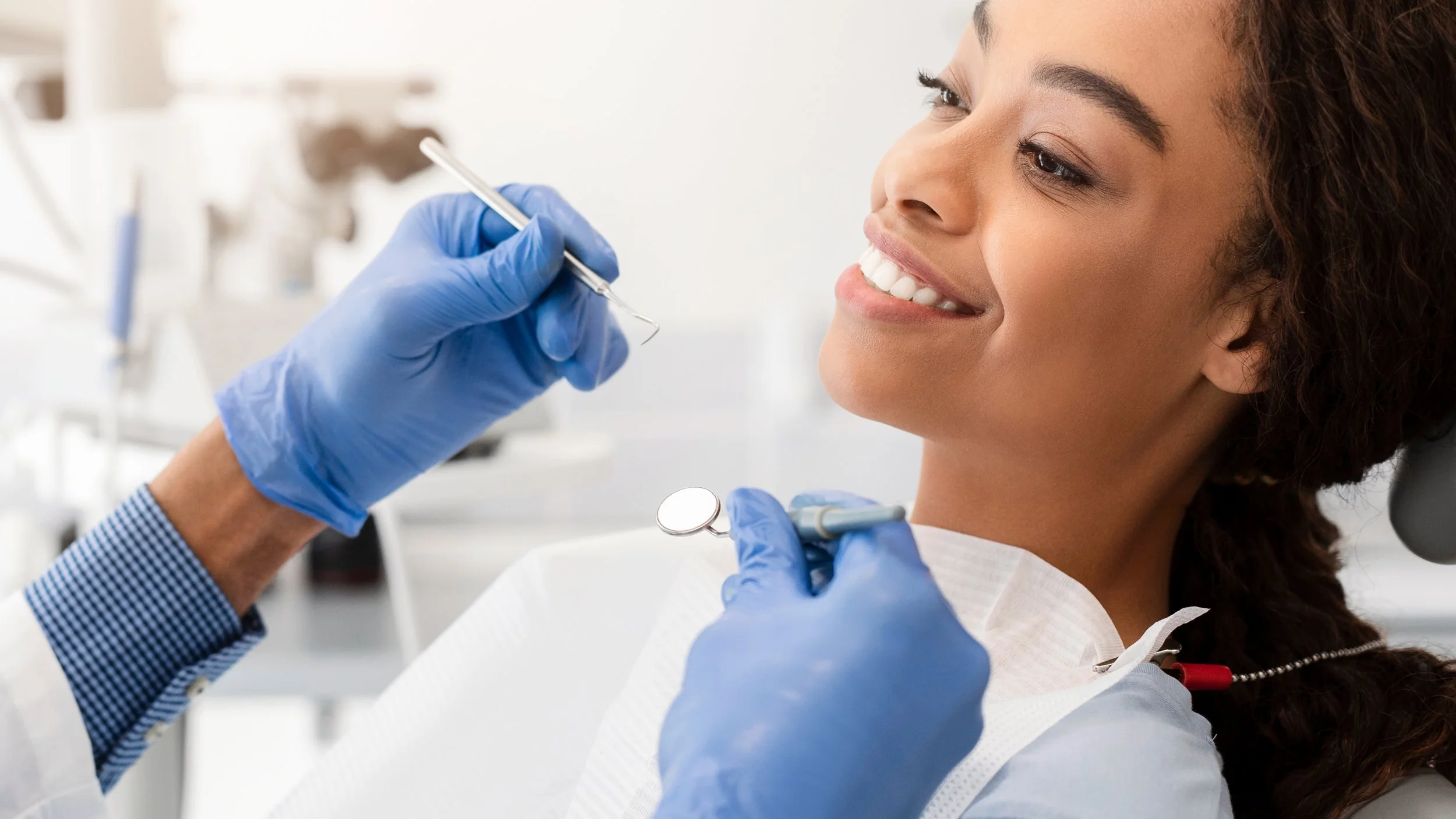
During your cleaning appointment, you will lie back in a comfortable dental chair that raises and lowers, allowing your hygienist to easily access your teeth.
The hygienist will start by performing an initial oral examination using a small mirror to look for any issues to alert the dentist to. If they see something serious, they will pause and consult with the dentist to determine how to proceed.
Otherwise, they’ll move on to the next step.
Step Two: Removing Plaque and Tartar
After the initial exam, the hygienist may begin with a pre-procedural rinse. Then, they will use a special set of tools to remove plaque and tartar buildup from your teeth, between your teeth, and gums.
Plaque is a sticky substance that coats your teeth when bacteria, saliva, and acid mix in your mouth while you eat.
Regular brushing and flossing can help remove plaque between dental hygiene appointments. Plaque that is not removed regularly hardens and forms tartar (aka calculus), which usually requires professional hygienist removal.
During this step, your hygienist uses special tools to remove plaque and tartar and examine your teeth and gums. They are:
Probe – This is like a small metal ruler that measures the space between your gums and teeth to determine gum health.
Dental Explorer – This can sometimes be on the other end of the probe. Dentists and hygienists both use this tool. They check the surfaces of your teeth for sticky spots, which may be signs of tooth decay, and the sides of your teeth to look for tartar.
11/12 Explorer – This tool does an even better job of getting in teeth crevices to look for tartar buildup before and after the cleaning.
Scalers – Patients might call these hand instruments “scrapers." Hygienists use different scalers for different teeth. For example, anterior scalers are for your front teeth, which you see when you smile. Posterior scalers are for your back teeth. The pointy ends of scalers remove plaque and tartar.
Curette – This is another type of scaler that is less pointy, and hygienists can use it to go below the gumline.
Gracey Curettes – These special types of curettes are used to go in precise, particular tooth locations.
Ultrasonic Scaler – This tool uses a combination of water and vibrations to remove plaque, tartar, and stains. Low settings are for light buildup, and high settings are for heavy buildup.
Saliva Ejector – This is a straw-like tool to suction air and saliva during a cleaning to keep your mouth dry.
Advanced Technology Tools at Sanitas Dentistry
Sanitas Dentistry proudly uses cutting-edge dental technology to deliver the most effective, efficient, and comfortable treatments:
Air Powder Polisher – For patients with sensitive teeth or who want a gentler option for stain removal, this high-tech tool uses a gentle stream of air and fine powder to remove plaque and stains, providing a thorough and comfortable cleaning experience.
Laser Bacterial Reduction - Our advanced laser technology targets harmful bacteria in the gums, promoting faster healing and reducing the risk of gum disease. The laser is precise, non-invasive, and enhances your overall oral health without the discomfort of traditional methods.
Step Three: Polishing
After removing plaque and tartar with a combination of hand and ultrasonic instruments, the hygienist polishes each of your teeth on all surfaces with an electric rotary polishing tip. They will use a gritty polishing paste in a variety of flavors to ensure your mouth tastes fresh and your teeth are shiny after your cleaning.
Step Four: Flossing
Once your teeth are cleaned and polished, the hygienist flosses between your teeth with dental floss to catch any residual plaque that might linger in teeth crevices. It also allows the hygienist to identify any issues with bleeding gums.

Photo: milkos via 123RF
Step Five: Final Rinse
As a last step, the hygienist will squirt water in your mouth, ask you to swish, and then suction to remove the water from your mouth. This final rinse also removes any residual bits of tooth polish.
Congratulations — you’re done with your professional dental cleaning!
Dental Exam with the Dentist
Before you leave the dental chair, the dentist will come in and do a final dental exam. If they don’t find any issues, you are all set to schedule your next routine dental cleaning appointment at whatever your dentist or hygienist suggests. This is typically set for six months into the future.
How Long Does a Dental Cleaning Take?
If it seems like we’ve described a lot of steps or procedures, you might be wondering, “How long does it take for a dental cleaning?”
The good news is that most normal dental cleanings take about 30 minutes to one hour. In some cases, however, deeper cleanings, heavy buildup, or other issues may require a longer appointment or multiple appointments.
The better oral hygiene habits you practice at home, the less buildup you will accumulate between cleanings, and the less time your hygienist will need to clean your teeth.
Benefits of Doing Regular Routine Dental Cleanings
There are multiple benefits to routine dental cleanings, every six months or as recommended by your dentist or hygienist. Here are some of the advantages:
Helps prevent cavities and gum disease
Allows dental professionals to spot non-symptomatic issues before they get worse
Reaches hard-to-reach areas of your teeth and gums that your toothbrush might miss
Allows vital screenings for signs of tumors, oral cancer, and other oral health concerns like gum recession, bite issues, or early signs of infection
How Often Do You Need Dental X-Rays?
Dental x-rays are radiographic images of your teeth and jaws, taken at the dental office.
Patients typically don’t need dental X-rays at every routine cleaning appointment. If your teeth and gums are healthy, you may only need X-rays every six to 18 months.
Like routine dental cleanings, dental X-rays are an essential part of maintaining good oral health. Dentists use X-rays to detect a variety of oral health issues, including:
Cavities on tooth surfaces and between teeth
Bone loss in your jaws
Tooth abscesses/infections
Impacted or unerupted teeth
Tooth decay under existing fillings
Cysts, tumors, or signs of oral cancer
To track the healing process after a root canal or bone graft
To determine if you’re a candidate for orthodontic procedures like braces or other procedures like implants
Best Oral Hygiene Practices Between Dental Cleanings
Good oral hygiene habits not only protect your teeth and gums, but maintaining oral health is also linked to whole-body health.
For example, mouth infections can flow into your bloodstream and carry bacteria to other parts of your body. This can lead to serious health concerns like heart disease, stroke, and pneumonia, to name a few.
Between dental cleanings, make sure you:
Brush your teeth twice daily with a soft-bristle toothbrush.
Use a fluoride toothpaste and mouthwash.
Floss daily and after meals.
Avoid eating and drinking sugary foods and beverages that are high in added sugar.
Avoid eating starchy snacks that cling to your teeth.
Avoid acidic foods, fruits, and beverages that can harm your enamel.
At Sanitas Family Dentistry, we are dedicated to protecting your teeth and preserving your smile! Call us today at (303) 449-8875 to schedule a routine in our Boulder office.
What Is Myofunctional Therapy? Everything You Need to Know
What is myofunctional therapy, and what kinds of orofacial myofunctional disorders does it treat? Learn more in this guide from Sanitas Family Dentistry.

Photo: saiarlawka via 123RF
Most people don’t think about swallowing or breathing through their nose — unless, of course, these automatic, vital functions are challenging.
Myofunctional therapy treats orofacial disorders that disrupt these actions, as well as conditions like obstructive sleep apnea, snoring, and speaking or chewing difficulties, to name a few.
If you’re unfamiliar with the term, you might wonder, “What is myofunctional therapy?” and who can benefit from orofacial myofunctional therapy exercises?
As a compassionate, expert myofunctional therapy Colorado provider, Sanitas Family Dentistry is dedicated to offering treatment options that help patients of all ages.
In this guide, we’ll discuss myofunctional therapy, the disorders it treats, myofunctional therapy tools, orofacial myofunctional therapy exercises, their benefits, and more.
What Is Myofunctional Therapy?
Myofunctional therapy (also known as orofacial myofunctional therapy or OMT) enhances tongue and facial muscle function via specific orofacial myofunctional therapy exercises to improve breathing, eating, swallowing, and orofacial disorders like TMJ and obstructive sleep apnea.
During guided exercises, a Certified Orofacial Myofunctional Therapist helps a patient strengthen or retrain muscles in the mouth or face, or become aware of proper ways to move or rest these muscles.
Focus areas include exercising the tongue, cheeks, jaws, and lips to improve oral rest posture and facial functionality during certain activities.
What Orofacial Myofunctional Disorders Do Therapists Treat?
Healthcare providers, including dental hygienists who become certified orofacial myofunctional therapists, treat various orofacial myofunctional disorders (OMDs) via specialized exercises.
Examples of orofacial myofunctional disorders include:
Mouth breathing – You might do this if you can’t get enough air through your nose. Chronic sinus issues, nasal congestion, allergies, enlarged tonsils or adenoids, a deviated septum, and sleep apnea are some of the reasons why people have challenges breathing through their nose. OMT encourages proper nasal breathing to decrease the frequency of mouth breathing.
Snoring – Snoring occurs when air flows through narrow, relaxed tissues in your mouth, throat, and nose. Doing mouth, tongue, and throat exercises to strengthen these muscles and promote proper tongue posture can help reduce or prevent snoring.
Malocclusion – Also known as a misaligned bite, this issue occurs when your upper and lower teeth don’t line up properly with your mouth closed. Genetics can cause this issue, along with childhood habits like thumb sucking and pacifier use, which may affect the way a child’s teeth and jaw develop. Also, losing teeth too early, teeth grinding, and teeth or jaw injuries can cause alignment issues.
Teeth clenching and grinding (bruxism) – When you clench or grind your teeth subconsciously throughout the day or while you sleep, it can cause headaches and jaw pain. Stress or anxiety can bring on or worsen grinding. OMT seeks ways to improve resting lip and tongue posture. Therapy can also balance and strengthen facial muscle functions to help decrease the severity and frequency of teeth clenching.
Tongue thrust – This condition usually occurs in children when they push their tongues against the back of their teeth while swallowing, speaking, or at rest. It can impair swallowing and speaking and cause mouth breathing and teeth protrusion, among other challenges. Research shows that OMT techniques can help correct tongue thrust.
Open-mouth posture – Open-mouth posture issues can affect your tongue, jaws, and teeth because your mouth stays slightly open at rest, rather than in a natural, sealed lip position. OMT helps correct your oral posture so that your tongue rests lightly against the roof of your mouth.
TMJ disorders – TMJ stands for the temporomandibular joint. Disorders affect the muscles and ligaments surrounding these joints and can cause chronic pain, difficulty chewing, jaw locking, facial pain, headaches, eye pain, jaw tenderness, and more. OMT decreases jaw tension, improves alignment, increases the jaw’s range of motion, and improves joint stability.
Neck tension and facial pain – OMT helps alleviate these issues.
Post-jaw surgery recovery - OMT can help make eating easier during post-jaw surgery recovery.
Post-lingual frenectomy (tongue tie) recovery – Doing OMT following tongue tie release surgery can help improve tongue range of motion, making eating and speaking easier.
How Orofacial Myofunctional Therapy Helps Obstructive Sleep Apnea
In 2019, research findings estimated that “936 million adults aged 30-69 years (men and women) have mild to severe obstructive sleep apnea, and 425 million (399-450) adults aged 30-69 years have moderate to severe obstructive sleep apnea globally.”
That’s nearly one billion people around the world who suffer from OSA, a condition in which “a blockage or narrowing in your airway keeps air from moving through your windpipe when you’re asleep.”
Oral myofunctional therapy goals aim to strengthen muscle function in your upper airway to help keep airways open. Treatment may also focus on repositioning your tongue and improving nasal breathing — also to open your airways.
Common Orofacial Myofunctional Therapy Exercises

Photo: seventyfour74 via 123RF
So, what is orofacial myofunctional therapy? Simply put, myofunctional therapy is like physical therapy for the mouth, tongue, face, and throat.
There are no known risks to performing OMT, and the exercises always target each patient’s specific conditions.
Healthcare professionals — including dental hygienists who are trained or certified in myofunctional therapy — can recognize orofacial issues and help guide patients through specific orofacial myofunctional therapy exercises to address, reduce the intensity of, and alleviate the concerns above.
For instance, if you struggle with snoring, your OMT provider may create an exercise plan that works on strengthening your tongue. Exercises may include:
Tongue push-ups
Tongue stretches
Tongue slide
Tongue aerobics
You can also do mouth exercises to help alleviate snoring. They target your cheek muscles, lips, and soft palate, such as:
Lip purse
Side-to-side jaw movement
Cheek hook
Open and close your mouth
Button hold
Throat exercises for snoring focus on strengthening the muscles around your airway. Doing these regularly makes your airway muscles less likely to vibrate or collapse while you sleep (which can cause snoring).
Throat exercises include singing or pronouncing vowel sounds (A E I O U) — and drawing them out — such as holding the sound for several seconds.
Regularly doing nasal breathing exercises encourages nose-breathing to keep your airway open while you sleep. They include breathing through your nostrils, one at a time, with your mouth closed.
More examples of myofunctional therapy exercises include playing a wind instrument, holding a small object between your lips, and lifting or extending your tongue in certain ways.
Examples of Myofunctional Therapy Tools
Hand weights and resistance bands are standard physical therapy tools that help strengthen your arms and legs. By comparison, myofunctional therapy tools help strengthen your lips, tongue, throat, and facial muscles.
Some of them may look fun, like bubbles to practice mouth posture or a straw to strengthen lips and encourage mouth closure.
More myofunctional therapy tools include:
A mirror to watch how facial muscles move
Small sticky dots to help a patient achieve proper tongue placement
A large mouth model
Tongue depressors
Tape for lip closure exercises
A pencil for tongue exercises
Bite block – to help stabilize the jaw
Small elastic bands (like those used in orthodontic treatments) – used to guide and achieve tongue placement
This list offers examples of common myofunctional tools that can be customized to address individual needs.
An Orofacial Myofunctional Therapist Creates a Personal Exercise Plan
A certified orofacial myofunctional therapist can recognize a variety of orofacial myofunctional disorders and recommend which OMT exercises can treat them best.
In creating a personal exercise plan, your provider will decide how long each OMT session will be, how often you will do the exercises, and how long you will continue treatments. The frequency and duration of treatments will depend on the condition treated.
Many treatments range from six to 12 months. Some patients do exercises with their providers in a dental office or clinic and continue doing exercises at home.
Myofunctional Therapy Offers Multiple Benefits
In understanding what myofunctional therapy is, knowing there are multiple potential benefits of OMT for children and adults can inform and encourage you. They include:
Improving lip or tongue position to help teeth alignment
Improving chewing and swallowing
Providing post-surgical support for jaw surgery
Reducing or eliminating mouth breathing
Reducing nail biting and thumb sucking
Making nasal and nighttime breathing easier
Supporting orthodontic goals and treatment
Decreasing snoring
Promoting better sleep quality
Getting better, more restful sleep that can help improve focus
Making speaking and communication easier
Boosting self-esteem and confidence
Our Team Is Here and Happy to Help
At Sanitas Family Dentistry, we are here and happy to help address your questions and concerns about orofacial myofunctional disorders and myofunctional therapy. Our Certified Orofacial Myofunctional Therapist, Reilly, has extensive knowledge and training to offer the best treatment options for you or your children.
Our team is committed to working together to deliver quality dental care that fosters lasting relationships and treats each individual person with compassion and kindness.
Contact us at (303) 449-8875 to schedule a consultation at our Boulder office.
2024 In Review - What a Year
This year was full of big events, education and business development. We completed over 130 hours of continuing education to keep up to date with the newest techniques and technology focused on Airway Centered Dentistry, Sleep Apnea, Myofunctional Therapy and the impacts of Tongue Tie. Our team is so excited to kick 2025 off with everything we learned in 2024 and I couldn’t wait to share a little of it with you!



Jolly Holiday Deal
Let’s Work Together!
Come in for an adult new patient exam, x-rays and cleaning and your child gets the same for free!
Located right on Pearl Street above Spruce Confections. Call for more details!
(303) 449-8875
Offer expires February 28, 2025

Non-Ablative Laser Soft Palate Remodeling
This procedure targets one of the primary culprits behind snoring and upper airway obstruction soft palate tissue laxity.
Compared with traditional approaches, this treatment is very well-tolerated, causes minimal discomfort, and complements other treatment modalities brilliantly.
Contact us to learn more! 303-449-8875

DESIGNED to complement other interventions for sleep and breathing, this procedure refines the soft palate by promoting collagen production and contraction, resulting in tissue firmness and improved airflow.

This precise laser treatment specifically targets soft palate issues while preserving healthy tissue. It may result in long-lasting relief from snoring, improved airflow, and can be effectively combined with orofacial myofunctional therapy, eXciteOSA, oral appliances, UPPP, or CPAP therapy for comprehensive treatment and enhanced results.