
The Ultimate Guide to Invisalign in Boulder
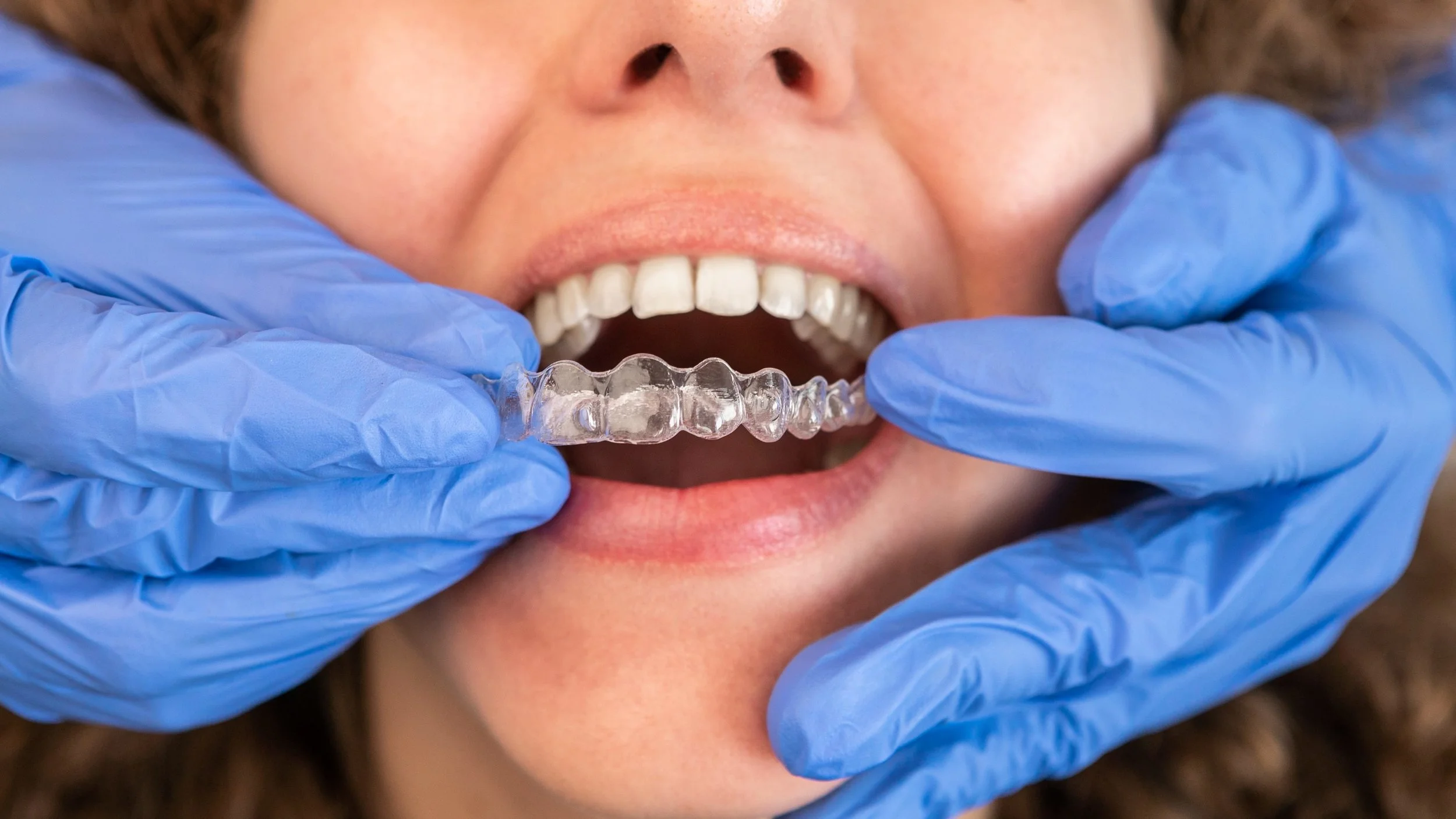
Photo: recstockfootage via 123RF
For many people, the idea of straightening their teeth sounds great — until they picture a mouth full of metal brackets and wires.
Some of us may even still be distressed from elementary-school braces and dental appliances, with a strong aversion to reliving that experience.
But the chance to have straighter teeth without all the unsightly metal? It’s one of the many reasons Invisalign has become so popular. It offers a more discreet, flexible way to straighten your smile, making orthodontic treatment feel much more manageable for adults and teens alike.
At Sanitas Family Dentistry, we meet patients every day who have been thinking about Invisalign in Boulder for months — or even years. Some had braces as kids and have noticed their teeth shifting over time. Others have always wanted a straighter smile but never had the opportunity to have braces.
If you're researching Invisalign in Boulder, this guide will answer the questions we hear most often, including how Invisalign works, what it can correct, how long treatment typically takes, and what to consider before choosing a provider.
Why More Adults Are Choosing Invisalign
For years, orthodontic treatment was something many people associated with middle school and high school. But that narrative has changed dramatically.
Adults now make up a significant portion of Invisalign patients at Colorado dental practices like Sanitas Family Dentistry, and it's easy to see why.
Clear aligners allow you to improve your smile without drawing attention to the fact that you're wearing braces or any kind of orthodontic treatment. Whether you're leading meetings at work, attending social events, speaking with clients, or simply taking family photos, most people won't even notice you're wearing them. It’s a perfect solution for teens and adults seeking a more flexible, subtle alternative to orthodontic treatment.
Just as importantly, Invisalign fits into everyday life in ways traditional braces simply can't. Because the aligners are removable, you can enjoy your favorite foods, brush and floss normally, and avoid many of the inconveniences that come with metal braces.
What Exactly Is Invisalign?
Invisalign provides a discreet, comfortable way to straighten your teeth. Clear aligners are custom-designed for your specific smile and gradually shift your teeth into the desired position — all without the need for traditional metal braces.
At Sanitas Family Dentistry, treatment begins with a digital scan of your teeth (no messy impression trays required). That scan allows us to map out how your teeth will move throughout treatment and even give you a preview of your future smile before you get started.
No two smiles are exactly alike, which means no two treatment plans are either!
How Does Invisalign Work?
If Invisalign seems too good to be true, we get it. Many patients have initial doubts. However, the system works incredibly well for many smiles. Each aligner is designed to apply gentle, controlled pressure to very specific teeth. That pressure encourages your teeth to gradually shift into healthier, more functional positions, creating a smile you can be confident in.
Patients typically wear each set of aligners for 1 to 2 weeks before moving on to the next set in the series. One thing we emphasize to our patients at Sanitas is that it is essential to wear the aligners for about 20 to 22 hours each day, removing them only to eat or drink anything other than water, and to brush and floss.
During your Invisalign journey, you'll also make periodic visits to your dentist, so they can monitor your progress and make sure your teeth are moving as expected.
Of course, during these fast, easy appointments, there are no wires to tighten or brackets to repair — unlike with traditional braces.
What Does Invisalign Feel Like?
If you ever had traditional braces, you may remember it being an unpleasant experience, especially every time you walked into the orthodontist office to have the wires adjusted or tightened. The truth is, Invisalign is quite different. It isn't painful — but you should expect some pressure, especially when you begin wearing a new set of aligners.
That pressure is actually a good sign. It means your aligners are doing exactly what they're designed to do: gently moving your teeth.
Most patients describe it as feeling tight for a day or two before becoming barely noticeable.
Because there aren't any metal brackets or wires rubbing against your cheeks and lips, many people find Invisalign significantly more comfortable and less intrusive than braces.
Living with Invisalign in Boulder

Photo: andreypopov via 123RF
One of the reasons many patients love Invisalign is that it adapts to your life — not the other way around.
You'll remove your aligners before eating, so there's no need to avoid your favorite foods like popcorn, apples, dried fruit, nuts, or chewy bread. You also continue brushing and flossing just as normal, so it’s far easier to maintain healthy teeth and gums throughout the treatment.
That said, Invisalign does require discipline. The most successful results depend on wearing the removable aligners consistently. Even “one day off” can affect your progress and delay your treatment.
How Long Does Invisalign Take?
In our quick-fix culture, time is always on patients’ minds. And with Invisalign, the truth about how long the process takes is: It depends.
Some patients with relatively minor spacing or crowding will complete their treatment in as little as six to nine months. Others with more complex orthodontic concerns may need to wear aligners for 18 months or more.
The good news? Many people begin to notice changes even within the first few months. And that’s incredibly motivating, especially for the days when you may want to skip wearing your aligners.
A consultation with a dentist can provide a more accurate time estimate.
What Can Invisalign Fix?
One of the biggest misconceptions we hear at our practice about Invisalign braces is that they're only meant for minor cosmetic improvements. That's no longer the case!
Recent advances in Invisalign technology have actually made it very possible to treat many of the same orthodontic concerns that once required traditional braces.
Invisalign can often be an excellent solution for crowded teeth, gaps between teeth, mild to moderate overbites, underbites, crossbites, open bites, and teeth that have shifted after previous braces. It can even be used to correct mild tooth rotations.
That said, every smile is different, and a comprehensive evaluation is key to know your options. Some more complex orthodontic cases may still benefit from traditional braces or a combination of treatments, but many of our patients at Sanitas Family Dentistry are surprised to learn they're good candidates for clear aligners in Colorado.
How Much Is Invisalign?
The short answer here, too? It depends. Because every treatment plan is unique, the investment will depend on several factors, including the complexity of your case, how many aligners you'll need, and how long the treatment is expected to take.
The good news is that Invisalign is generally comparable in cost to traditional braces. Many dental insurance plans also include orthodontic provisions that can offset some of the expense. So, it’s a good idea to see what benefits are available to you. Flexible financing options can also make treatment manageable for your budget.
At Sanitas Family Dentistry, we'll walk you through your treatment plan, explain your options, and provide transparent pricing before treatment begins so there are no surprises.
Choosing the Right Invisalign Provider
There's something we always tell patients who are comparing Invisalign providers: The aligners are only one piece of the puzzle.
Every Invisalign case starts with the same product, but not with the same plan. Your dentist is the one deciding how your teeth should move, when they should move, and how to get you to a smile that not only looks great but functions well, too.
That's why experience matters.
If you're looking for the best dentist for Invisalign in Boulder, Louisville, Erie, Lafayette, or Superior, don't be afraid to ask questions. How often does the practice provide Invisalign? What technology do they use? Will they be monitoring your progress throughout treatment, or are appointments largely check-ins?
Those details make a difference.
Teeth don't always move exactly the way we expect them to. Sometimes everything goes according to plan. Sometimes a tooth needs a little more time, or treatment needs a small adjustment along the way. That's completely normal, but it's also why ongoing oversight is so important.
At Sanitas Family Dentistry, Invisalign isn't about handing you a series of aligners and hoping for the best. We closely monitor your progress to ensure your treatment stays on track.
Is Invisalign the Best Solution for You?
For many of our patients, Invisalign provides exactly what they're looking for, and they're so glad they did it. It’s a seamless way to straighten their teeth without the look or feel of traditional braces. Others could be better served with a different orthodontic approach.
If you've been thinking about invisible braces in Colorado, we'd be happy to sit down with you at our practice to discuss your smile and explore your options.
One thing we remind patients all the time is that straighter teeth aren't just about appearance. When your teeth are properly aligned, they're often easier to brush and floss, they can wear more evenly, and they may even make your bite feel more comfortable. A beautiful smile is certainly a benefit — but so is a healthier one.