
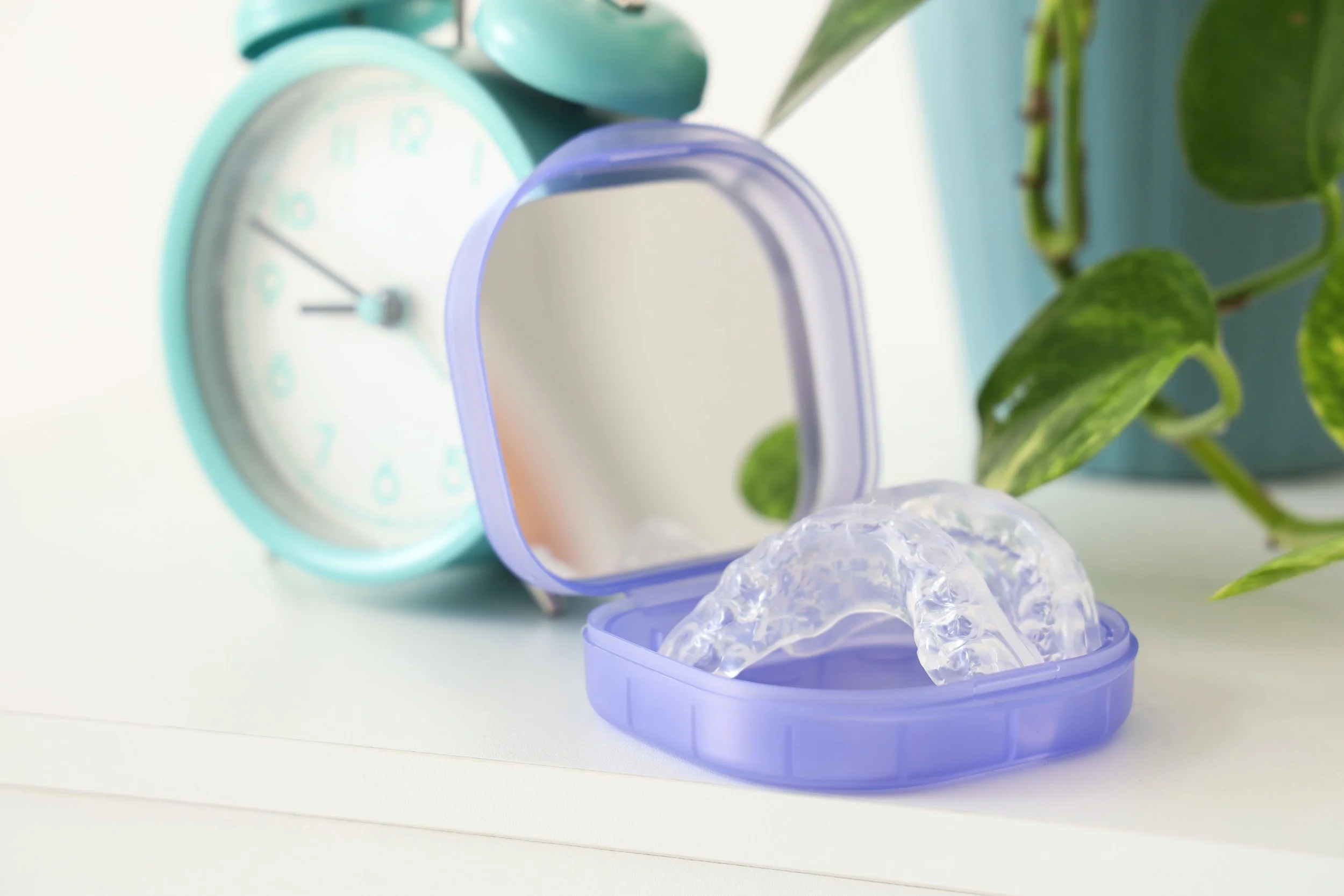
Photo: serezniy via 123RF
Night guards and mouth guards are both protective measures for your teeth — kind of like a helmet is for your head. But that’s where the similarities stop.
While night guards and mouth guards are often grouped together because they look similar to each other, they serve very different purposes. One is designed to protect your teeth from nighttime grinding and clenching. The other is meant to prevent injury during sports.
At Sanitas Dentistry, we regularly help patients across Louisville, Boulder, Erie, Lafayette, and Superior understand the differences between a night guard and a mouth guard, and whether either one is right for them.
In this guide, we’ll walk through what night guards do, how they’re different from mouth guards, and how they may be able to help you.
What Is a Night Guard?
A night guard for grinding teeth is a dental appliance that’s worn only while you sleep. Sometimes referred to as an occlusal splint, occlusal guard, or bite splint, it creates a protective barrier between your upper and lower teeth to prevent any damage caused by clenching and grinding — a condition known as bruxism.
Because bruxism often happens unconsciously during sleep, many of our patients at Sanitas Dentistry don’t even realize they grind their teeth. Others may wake up in the morning with a headache or experience soreness and stiffness in their jaw, without initially understanding why.
Dentists can detect even subtle signs of bruxism, like worn enamel or small fractures, gum recession caused by pressure, or jaw inflammation. All these clues could point to teeth grinding.
How Does a Night Guard Work for Grinding Teeth?
While many people may grind their teeth from time to time, especially during highly stressful times, it becomes a concern if signs and symptoms point to repeated grinding.
That’s where a dental night guard comes in.
A dental night guard works in several ways, and most patients notice the difference pretty quickly.
It acts as a shock absorber of sorts.
Think of the guard like a cushion or a barrier between your upper and lower teeth. Instead of enamel grinding directly against enamel, the guard absorbs all that pressure. Over time, this is what helps prevent cracks, chips, and the gradual flattening of your teeth.
It distributes pressure evenly.
People don’t often grind their teeth uniformly — certain teeth take the brunt of it. So, a night guard spreads that pressure out more evenly, again protecting your teeth.
It relaxes the jaw muscles.
Many patients are also really happy to find that their jaw feels more relaxed during the day once they start wearing a night guard. The guard slightly changes how your teeth come together, which can decrease the intensity of your grinding and clenching. Less intensity often means fewer morning headaches and reduced jaw stiffness and facial soreness.
It protects dental work.
If you have crowns, veneers, implants, or orthodontics, a night guard adds an extra layer of protection for that dental work in addition to your natural teeth.
It’s important to know that the night guard won’t actually stop teeth grinding, but it does mitigate any short-term and long-term effects of bruxism by protecting your teeth and jaw.
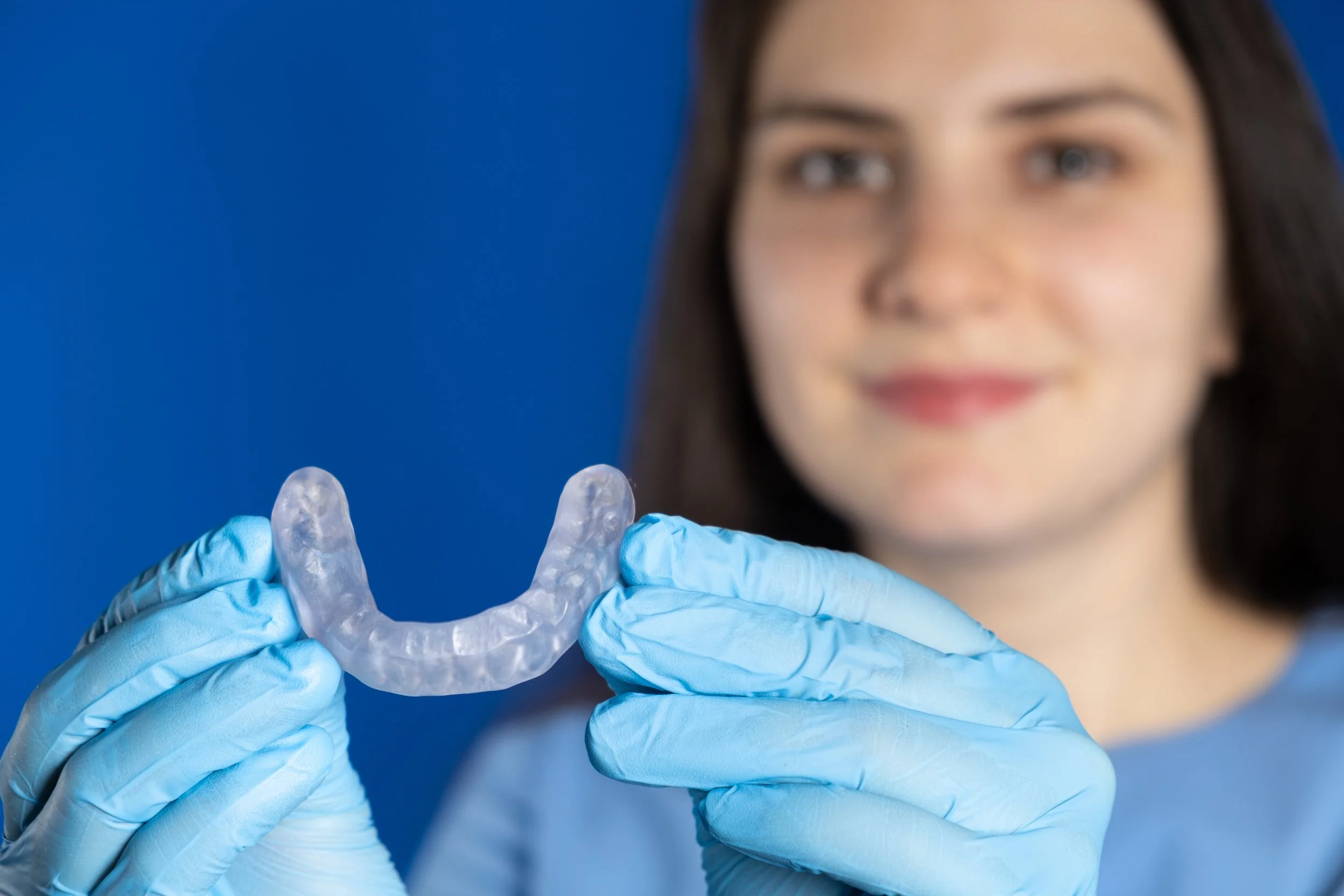
Photo: garnazarina via 123RF
An Important Distinction Between a Mouth Guard and a Night Guard
A mouth guard, sometimes called a sports guard, is also protective, but it’s designed to protect your teeth from a completely different type of force.
While night guards mitigate the negative effects of prolonged grinding, mouth guards are designed to absorb sudden impacts, such as a hit during football, boxing, or martial arts.
Mouth guards are typically thicker and bulkier because they need to cushion teeth against trauma. While they’re excellent for preventing chipped or knocked-out teeth during athletic activity, they’re not designed to address nighttime grinding or jaw tension.
This is where confusion can arise. Patients sometimes purchase a sports mouth guard hoping it will solve their grinding problem. Unfortunately, it usually doesn’t provide the right type of protection and can even feel uncomfortable during sleep because it’s so much bigger than a night guard.
How Much Is a Night Guard from the Dentist?
One of the most common questions — and even concerns — we hear is: How much is a night guard from the dentist?
While you can purchase a relatively inexpensive night guard off the shelf at a drugstore, we really encourage our patients to invest in a professional, custom-fitted night guard. We see the best results with guards that are personally designed to fit your mouth.
While pricing varies based on materials and customization, these options will cost more than over-the-counter options because they use impressions or digital scans for personalization. But that extra investment means the night guard will be more durable, more comfortable, and longer-lasting; plus, it’s generally more effective because it’s designed for your specific mouth and bite alignment.
In our experience at Sanitas Dentistry, many dental insurance plans provide partial coverage for a night guard when it is deemed medically necessary. We walk patients through options and provide fair and transparent pricing so there are no surprises down the line.
Are Night Guards Worth It?
From a clinical standpoint, the answer is absolutely “yes,” especially if grinding is already causing damage to your teeth.
Many patients hesitate because they’re unsure about the cost or wonder if they should just buy something over the counter. But when you compare the price of a custom dental night guard to the cost of repairing damaged teeth or replacing crowns, the value becomes clear.
When we talk with patients who are evaluating whether a night guard is worth it, we’ve often found it helpful to help them reframe the question. Instead of, “Is this necessary?” make sure you’re also answering the question: “What happens if I do nothing?”
In many cases, the ongoing daily discomfort and the long-term cost of untreated grinding are significantly higher.
How Often Do You Have to Replace Night Guards?
With the right TLC, a night guard can last you for at least a few years before you may need to replace it. The actual timeline depends on the severity of your bruxism and how well the guard is maintained.
If you grind heavily, you may wear out the appliance more quickly. But this is actually a good thing — because it means the guard is absorbing the force instead of your teeth!
Regular checkups will allow your dentist to monitor wear and recommend a replacement when necessary.
How to Clean Night Guards Naturally
Speaking of TLC, proper care extends the life of any appliance, including night guards, while protecting your oral health. If you’re wondering how to clean night guards naturally, the process is quite easy.
Every morning, rinse the guard with water and gently brush it with a soft toothbrush. Then, put it in a safe place to dry.
For deeper cleaning, about once a week, soak the guard in a diluted vinegar solution or hydrogen peroxide to help remove any buildup. Avoid hot water, as it can warp the material. And whatever you do, do not place it in the dishwasher!
Where to Get a Night Guard
Now that you can answer the question, “How does a night guard work?,” you may be ready to take the next step.
If you’re looking for where to get a night guard in Louisville, Boulder, Erie, Lafayette, or Superior, Sanitas Dentistry is here to help.
We begin the process with a comprehensive consultation and evaluation to listen to your symptoms, assess for signs of tooth wear, evaluate your bite, and determine whether grinding is contributing to any discomfort or enamel damage.
If we decide that a night guard is right for you and you want to move forward, we take impressions to create a precise fit. Once your guard is ready, we ensure it fits comfortably and make any adjustments.
Because bruxism is often a long-term habit, ongoing attention and care matter — and it’s something we keep an eye on during every routine six-month cleaning and exam.
Remember: A well-fitted guard today can eliminate the side effects of bruxism and prevent significant restorative treatment in the future.